Optimizing Shelf-Stability: Why Fiber Desiccants are the New Standard for Freeze-Dried Operations
Patrick SassanoIn the premium freeze-dried sector, your brand’s reputation is only as strong as your product’s organoleptic properties at the moment of consumption. For high-hygroscopic items (most notably freeze-dried strawberries) the margin between a premium "snap" and a sub-standard "chew" is measured in fractions of a percentage of Equilibrium Relative Humidity (ERH).
As we scale into 2026, the industry is moving away from traditional desiccant sachets in favor of fiber desiccant technology. For business owners, this isn't just a packaging pivot; it’s a strategy for reducing returns and extending the "last mile" freshness of your inventory.
The Problem: Cellular Integrity vs. Moisture Vapor
Freeze-dried strawberries possess a unique porous matrix that is highly susceptible to moisture adsorption. When the internal moisture content of the fruit rises above 2% to 3%, the cellular structure begins to collapse. This leads to:
- Textural Degradation: Loss of the characteristic "crunch."
- Color Oxidation: Anthocyanin breakdown leading to browning.
-
Flavor Muting: Increased water activity accelerates the loss of volatile aromatic compounds.
Why Fiber Desiccants Outperform Silica Gel

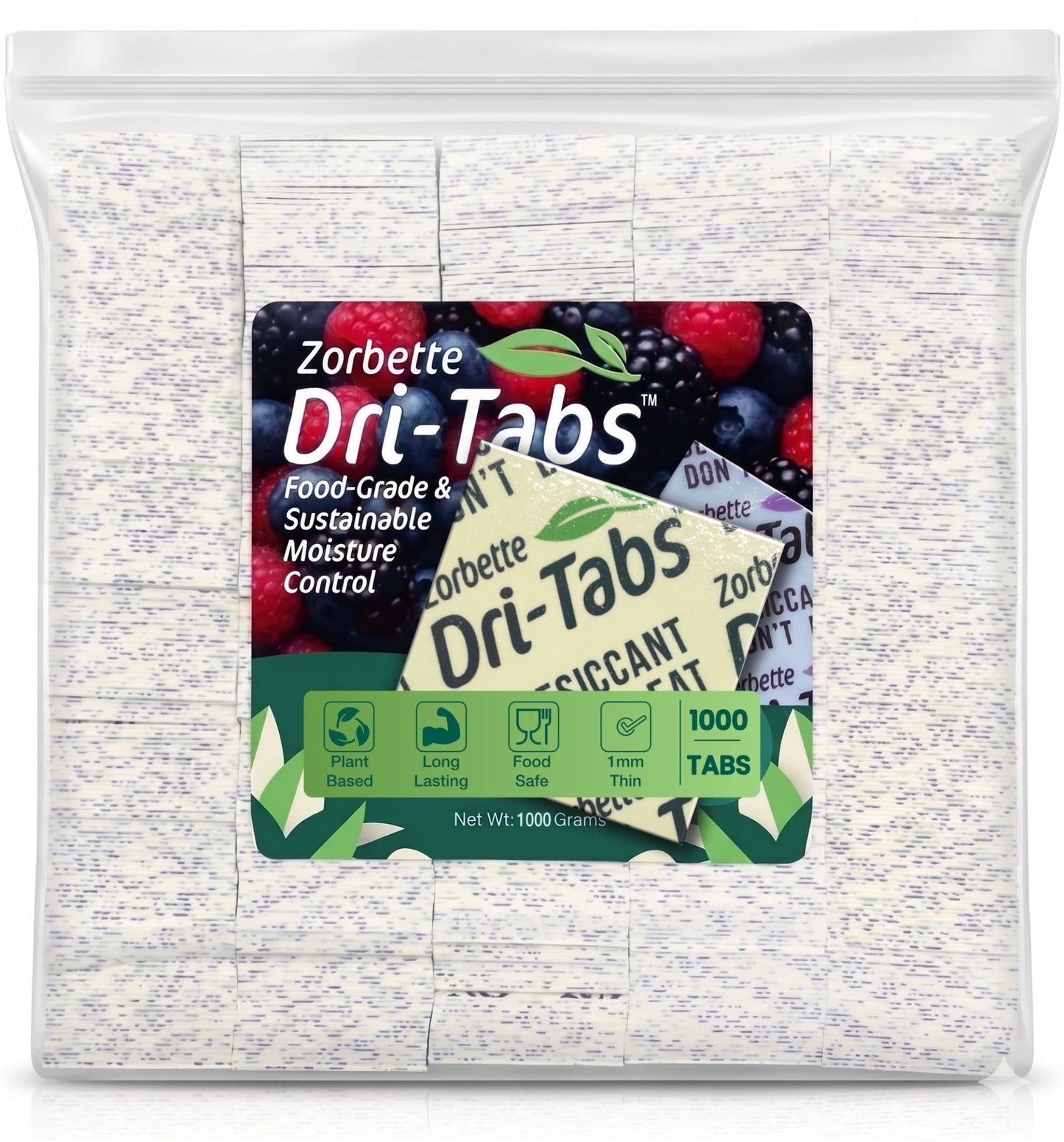
Traditional silica gel packets have long been the industry standard, but they present several operational liabilities. Fiber desiccants, composed of ultra-purified cellulose fibers and natural salts, offer a more sophisticated moisture-management profile.
1. High-Density Adsorption Capacity: Fiber desiccants are engineered to adsorb up to 100% of their own weight in moisture. In contrast, standard silica gel typically plateaus at 30-40%. For businesses, this means you can achieve the same—or better—moisture protection with a significantly smaller footprint, allowing for more product volume per bag.
2. Elimination of "Dusting" and Leakage Risks: For food safety compliance, the physical integrity of your desiccant is paramount. Silica gel beads are prone to attrition (breaking down into fine dust) or sachet rupture. Fiber desiccants are solid-state; they do not leak, dust, or spill. This reduces the risk of consumer complaints and simplifies your HACCP (Hazard Analysis and Critical Control Point) protocols.
3. Integrated Form Factors: One of the greatest advantages for 2026 packaging lines is the form factor. Fiber desiccants can be manufactured as flat sheets, discs, or even integrated into the lid or the packaging material itself.
- Space Efficiency: Flat discs take up negligible volume compared to bulky pillows.
- Automated Insertion: Their uniform shape allows for faster integration into high-speed automated packing lines.
Technical Comparison: Operational Impact
|
Metric |
Traditional Silica Sachet |
Advanced Fiber Desiccant |
|
Adsorption Efficiency |
Moderate (30% weight) |
High (100% weight) |
|
Physical Profile |
Bulky, loose-fill |
Ultra-slim, precision-fit |
|
Material Safety |
Synthetic beads; risk of dust |
Food-grade cellulose; dust-free |
|
Sustainability |
Plastic/Tyvek (Non-compostable) |
Biodegradable/Recyclable options |
|
Market Perception |
"Industrial" look |
Clean-label/Sleek integration |
The cost of a premium fiber desiccant is an investment in customer lifetime value (CLV). A consumer who opens a bag of "chewy" freeze-dried strawberries is unlikely to be a repeat buyer. By maintaining an ultra-low water activity environment throughout the shipping and storage cycle, you ensure that your product reaches the consumer exactly as it left the lyophilizer.
Furthermore, as global sustainability regulations tighten in 2026, switching to biodegradable fiber-based desiccants allows your brand to stay ahead of the curve, positioning your product as a premium, eco-conscious choice in a crowded market.
Conclusion for Operations Managers
If you are currently utilizing silica sachets, it is time to run a comparative shelf-life study. Transitioning to fiber desiccants can reduce your package weight, improve your food safety profile, and most importantly, guarantee the "crunch" that defines your brand quality.