How Fiber Desiccants Are Renewably Sourced From Hibiscus Plants
Patrick SassanoWhen most people hear “hibiscus,” they picture a tropical flower in a tea blend or on a vacation shirt, not something that keeps moisture under control.
But behind those bright blooms is a humble workhorse of a plant whose fibers can replace traditional plastic-heavy silica gel packets. In this post, we’ll walk through how fiber desiccants can be renewably sourced from hibiscus plants and why that matters for both performance and the planet.
First things first: what is a fiber desiccant?
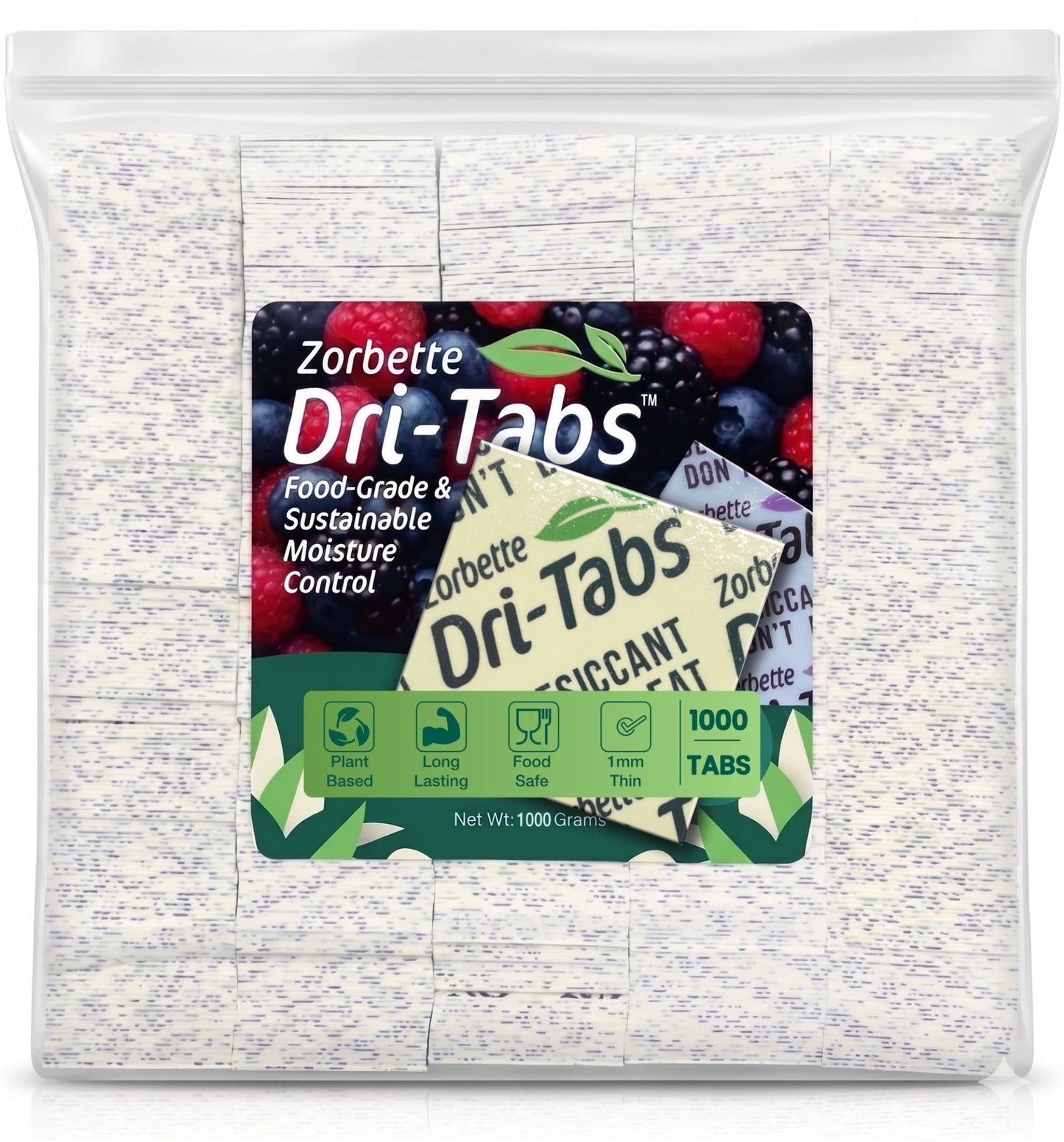
A fiber desiccant is a thin, paper-like pad made from plant fibers that’s been infused with moisture-absorbing minerals (like calcium chloride or other hygroscopic salts).
Instead of loose pellets inside a plastic or Tyvek® packet, the absorbing chemistry is embedded directly into a dense, porous fiber matrix. The result:
Thin, low-profile pads:
- No “packet bursting” or dust spill risk
- Easier to custom-size and fit into tight spaces (safes, food pouches, electronics, pet treats, etc.)
- Far less plastic, much more plant-based content
When those plant fibers come from hibiscus, the sustainability story gets even more interesting
Meet the hibiscus fiber family: kenaf & roselle
In industrial fiber applications, “hibiscus” usually shows up in the form of two close relatives:
Kenaf (Hibiscus cannabinus) – a warm-season annual grown specifically for its long bast fibers in the stem. It’s been used for paper pulp, cordage, bio composites, and other industrial materials.
Roselle (Hibiscus sabdariffa) – the same species often used for hibiscus tea, but its stalks also yield useful fibers that can be turned into pulp and paper.
Both are non-wood fiber crops, meaning they don’t come from trees. Instead, they are fast-growing annual plants that can be planted, harvested, and replanted every year, which is a big part of why they’re considered renewable alternatives to traditional wood pulp.
Researchers have found that kenaf, in particular, provides high biomass yields and can supply fiber for paper, bio composites, and other materials with less energy and fewer chemicals than many wood pulps.
Those same characteristics make hibiscus fibers an ideal backbone for sustainable desiccant materials.
Why hibiscus is such a renewable superstar
Let’s break down what makes hibiscus-derived fibers so attractive from a sustainability standpoint.
1. Fast-growing annual crop
Kenaf and other hibiscus fiber crops are typically harvested within a single growing season. Compare that to trees, which can take years or decades to grow before they’re turned into pulp. Shorter growth cycles mean:
Faster renewal of fiber supply
Less pressure on forests and long-rotation timberlands. More flexibility for farmers to rotate crops and respond to market needs
2. High fiber yield per acre
Kenaf is known for producing a lot of biomass, stalks full of usable fiber. Studies identify it as a high-productivity fiber crop with strong potential to replace or supplement wood fiber in pulp and paper products. Taylor & Francis Online+2Frontiers+2
In practical terms: you can get a lot of usable fiber from a relatively small amount of land.
3. More of the plant gets used
Hibiscus fiber crops aren’t single-use. Research has shown that:
The bast fibers (outer bark) are used for paper, textiles, and composites.
- The core (inner stem) can be used for things like growing media and filtration. Soil, Water, and Ecosystem Sciences
- The leaves can serve as livestock feed, and the seeds can even be used for oil. Soil, Water, and Ecosystem
- When a crop generates multiple valuable streams, less of it goes to waste, and more economic value is squeezed out of the same acre.
4. Lower environmental footprint vs. synthetic fibers
Natural fibers like hibiscus and kenaf can replace synthetic fibers (like glass fiber) in certain applications, often using significantly less energy per kilogram of fiber produced.
For desiccants, that means the structural “sponge” layer (the fiber itself) can be grown in a field instead of manufactured from petrochemicals.
From hibiscus field to fiber desiccant: step-by-step
So how does a hibiscus plant become a thin, powerful moisture-absorbing pad? Here’s the simplified journey.
Step 1: Growing & harvesting the crop
Farmers plant kenaf/hibiscus seeds in warm, sunny conditions. The plants grow quickly, forming tall stalks loaded with bast fibers. After several months, they’re harvested, usually by cutting the stems near the base.
Because hibiscus fiber crops are annual and fast growing, they can help diversify agricultural rotations and reduce reliance on long-rotation tree plantations.
Step 2: Separating the fibers
The harvested stalks go through:
Retting – letting microbes and moisture break down the “glue” (pectins) that hold fibers to the woody core.
Decortication – mechanically separating the long outer bast fibers from the inner core.
Those long bast fibers are what we want for strong, paper-like desiccant sheets. They’re then cleaned and sometimes chemically or enzymatically treated to remove waxes and non-fibrous components.
Step 3: Turning fibers into pulp
Next, the hibiscus fibers are pulped, similar to how wood is turned into paper pulp, but often with lower chemical and energy requirements than many conventional wood pulps.
You end up with a wet, fibrous slurry that can be formed into sheets.
Step 4: Infusing with moisture-absorbing minerals
Here’s where the “desiccant” magic happens.
The hibiscus fiber pulp is mixed with hygroscopic minerals, things like calcium chloride or other safe moisture-absorbing salts. Instead of being filled into a packet, those minerals are locked into the fiber matrix.
This creates a:
- Stable, solid sheet
- High surface area for contact with humid air
- Strong structure that doesn’t leak loose pellets
Step 5: Forming and drying the sheets
- The mineral-loaded fiber slurry is then:
- Spread into a thin layer (like making paper).
- Pressed to remove excess water and densify the structure.
- Dried to lock in strength and porosity.
At this stage, a manufacturer can optionally laminate the sheet with an extremely thin protective film (such as PET) or leave it uncoated, depending on the application and desired level of biodegradability.
The finished material is then cut into precise shapes and sizes, squares, rectangles, or custom profiles, ready to be used as fiber desiccants.
Why renewable hibiscus sourcing matters for moisture control
Sourcing desiccants from hibiscus-based fibers isn’t just a neat sustainability story. It has real-world advantages over traditional silica gel packets.
1. Less plastic and petrochemical.
Conventional desiccants typically involve:
- Synthetic or mined materials (silica gel, clay, etc.)
- A plastic or Tyvek® pouch
- Ink and adhesives on the packet
Fiber desiccants built on hibiscus pulp can dramatically increase the plant-based content and reduce the plastic footprint.
2. Potential for higher biodegradability
When you rely primarily on plant fibers and pair them with carefully chosen hygroscopic minerals, you can design a desiccant that is largely biodegradable, especially if you avoid thick plastic coatings.
Hibiscus fiber crops such as kenaf are already studied as sustainable feedstocks for paper and bio composites, thanks in part to their renewable nature and the ability to replace wood pulp and synthetic fibers.
3. Better alignment with modern food & consumer brands
Brands across food, pet, outdoor gear, and consumer goods are under pressure to:
- Reduce plastic
- Lower carbon footprint
- Use more renewably sourced ingredients
A desiccant made primarily from hibiscus plant fibers fits naturally into that story. Instead of hiding a crinkly packet that screams “chemical,” you can talk about a plant-based moisture pad supporting both product quality and environmental goals.
4. Performance plus planet
Because hibiscus fibers form a dense, porous matrix, they can help distribute and retain moisture-absorbing salts efficiently. Combined with smart formulation, fiber desiccants can rival or outperform traditional packets in:
- Speed of moisture uptake
- Holding capacity
- Durability (no tearing, no spilling pellets)
All while starting from a renewable field crop instead of a fossil-fuel-intensive or mining-intensive material.
The future is plant-powered (and dry)
Desiccants are one of those invisible products we rarely think about, even though they’re everywhere, inside food packaging, pet treats, electronics, safes, ammo cans, storage bins, and more.
Switching the “boring little packet” from a plastic-wrapped silica or clay pouch to a hibiscus-based fiber pad might seem like a small change. But it’s one of those quiet innovations that help move entire supply chains toward:
- More renewable inputs
- Less plastic waste
- Lower environmental impact
All while doing the same job, keeping humidity under control, often even better.